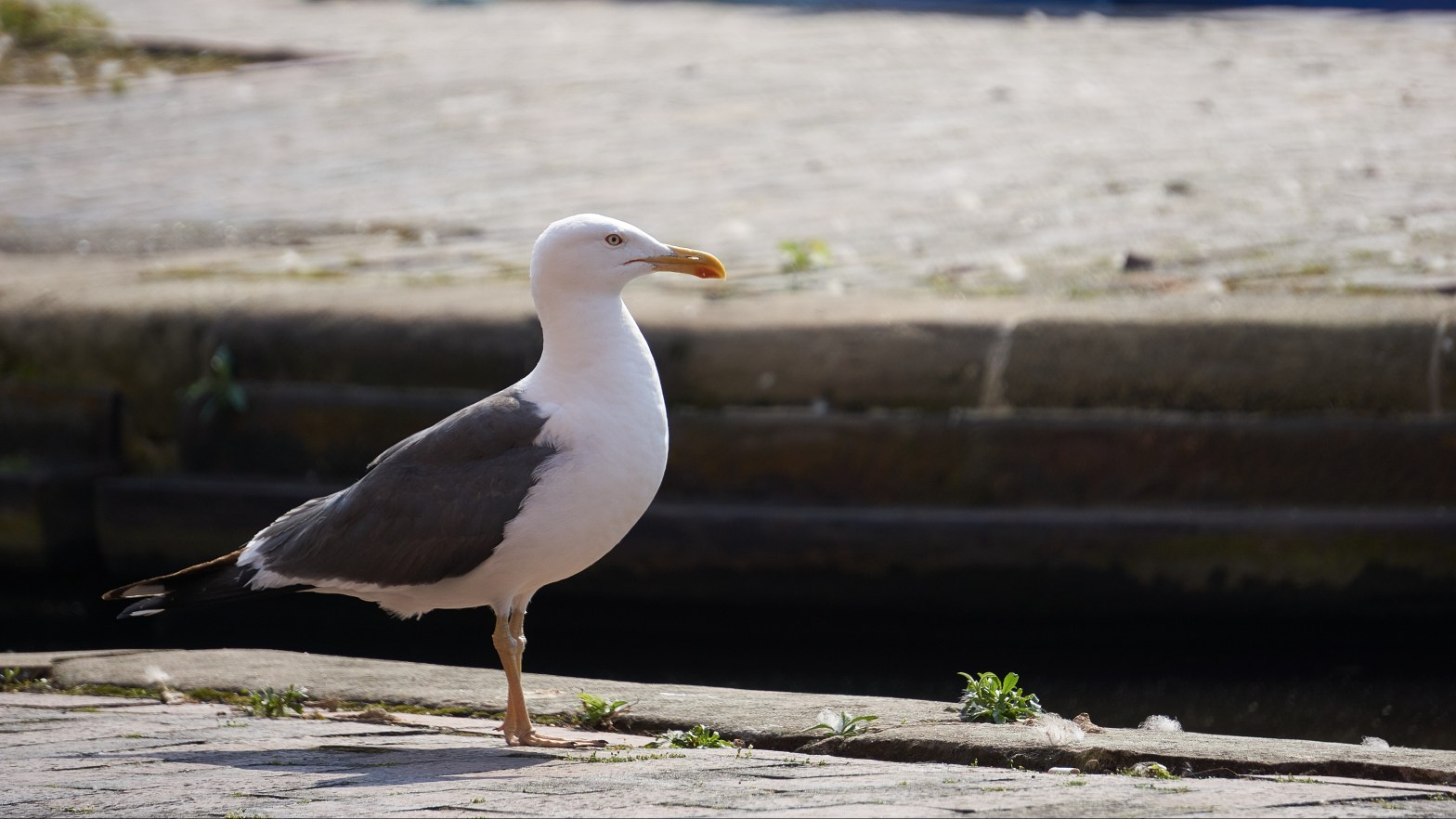
Recently, I have been waking up early, often to a cacophony of gull shrieks outside my window.
In my semi-slumber, it is not hard to imagine that I live by the coast, a stone’s throw from golden beaches and the sparkling sea, rather than a short distance from the swaying grass and watery ditches of the common lands.
Is there a more evocative sound in the whole of the UK birdscape….the huoh-huoh-huoh of the herring gull mixed in with a myriad of other cries emanating from accompanying lesser blacked-backed gulls and black-headed gulls? Experts say these different calls all mean something – a jumble of sounds relating to courtship, territorial disputes, and food frenzies. To me it all speaks of sandcastles, sunshine and the theme tune to Desert Island Discs.
Gulls, I tell you
Whenever I think of gulls, I remember a former colleague who had a passion for these birds and who would spend much of his spare time with his binoculars at the RSPB reserve at Minsmere on the Suffolk Coast. He was a fairly laid-back fellow unless you happen to utter the word ‘seagull’ – an expression that would instantly rile his temper. “There is no such thing as a ‘seagull’ – they are gulls, gulls, I tell you,” would be his grumpy reply.
And old John had a point – increasingly I am seeing more gulls inland, in Sudbury, nowhere near the sea. Where I live, near the old Vanners factory in the middle of town, gulls took over for several weeks. Sitting in a friend’s garden nearby, we watched one evening as they criss-crossed the blue sky, mewling and screaming, expert gliders surveying the scene below.
Like all animals that live close to and have come to be dependent on humans, gulls are regarded as pests. But there is real beauty in their white-black-grey colouration and effortless flight, while their tenacity and adaptability can only be admired.
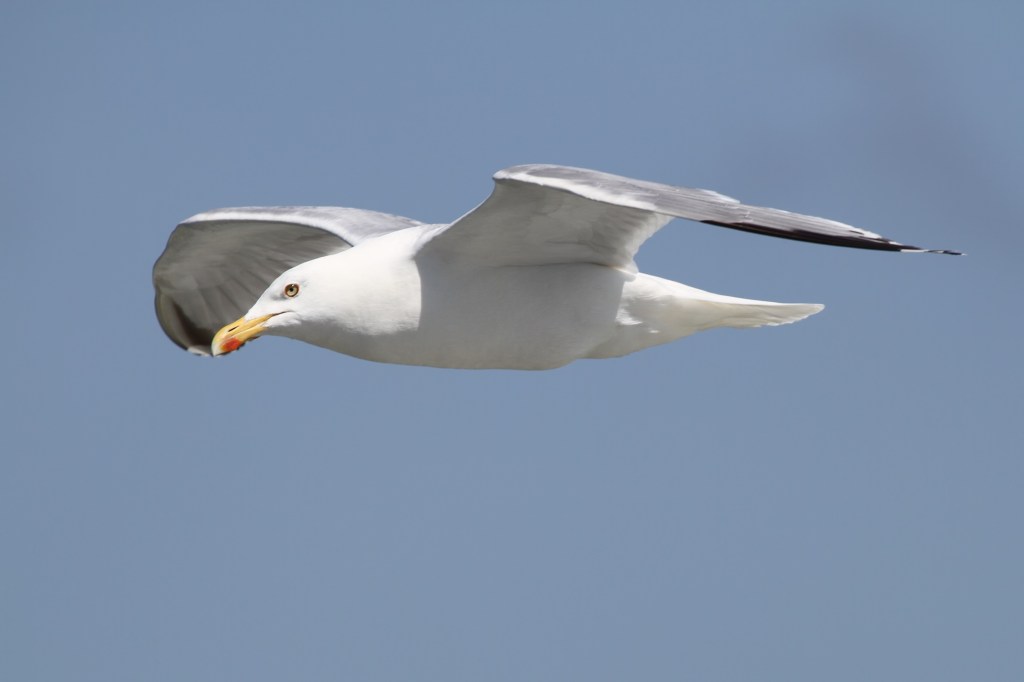
Landlubbers
It used to be said that seeing gulls inland was an indication of stormy weather on the coast – I am not sure if that is a folk tale, but today they are found away from the sea for numerous reasons.
Experts suggest that gulls have made the move inland because they encounter fewer predators, particularly on the rooftops of city buildings where the ‘urban’ gulls tend to make their home.
It is also said that as the fishing industry has declined, so has the ready supply of fish waste, which was key food source for gulls on the coast. Instead, they have headed inland where there is plentiful waste food in cities and towns found in backstreet bins and rubbish dumps. It does not matter where they live, gulls are scavengers, happy to feed on discarded chips and half-eaten sandwiches, and often trying non-edible rubbish in the process. Gulls’ large appetite has been recognised down the ages – the scientific name for the gull family Laridae relates to the Greek word for gull Laros, which means ravenous seabird.
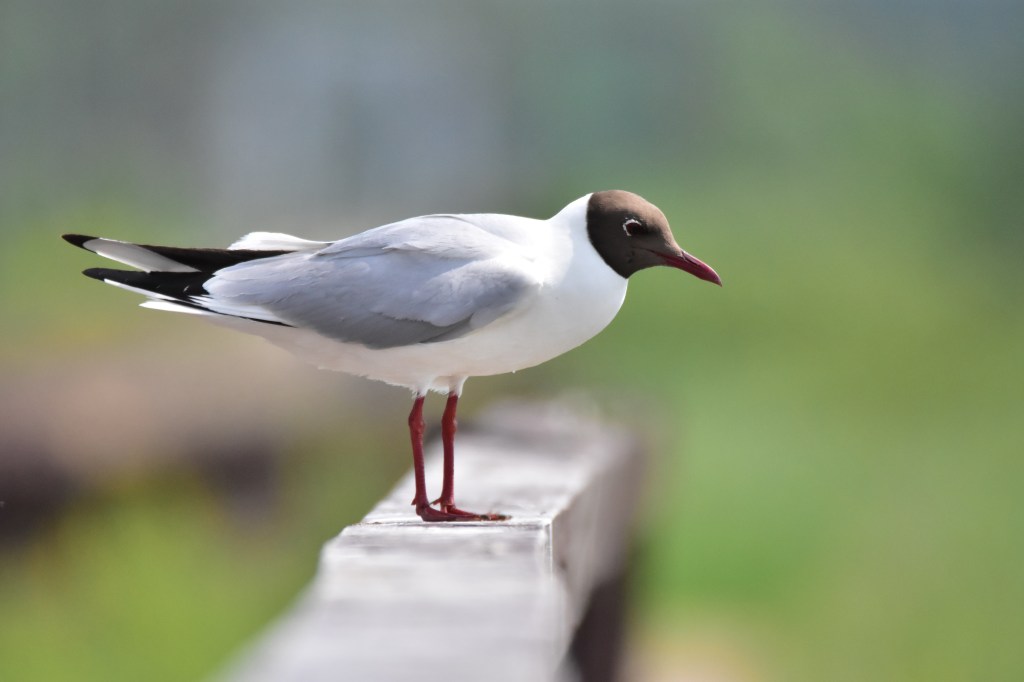
But while today’s gulls will eat what we discard – it was not too long ago that we consumed them. A particular delicacy was the black-headed gull – the smallest and most common gull we see; its name a misnomer, as its head is actually a chocolate-brown colour.
Commercial farming of black-headed gulls’ eggs and chicks continued into the 1900s with one of the best know gulleries located at Scoulton Mere – west of Norwich. Thousands of eggs were collected each season and sent to London where the chicks were also regarded as a tasty treat for the wealthy. If you are ever that way, check out the Scoulton village sign, which shows two black-headed gulls and a monk collecting their mottled eggs.
Territorial
One thing I have noticed about gulls is their ferocity when it comes to protecting their territory, and especially their young. As I was walking up Weavers Lane recently, the gull gang started screaming at me. I realised that on the other side of the wall, on Vanners car park, were ( I think) two lesser black-backed gull chicks walking around, obviously recently fledged. It was clear, I was seen as a threat, and I was dive-bombed a couple of times as I retreated back down the street. I know now how Tippi Hedren felt as the gulls attacked and trapped her in the phone box in Alfred Hitchcock’s The Birds.
Last year, I saw three gulls mob a buzzard that was circling over Sudbury, working together to see it off, and several weeks back witnessed a single gull fearlessly chase away a red kite, twice its size. All those sat in the Bay Horse beer garden were awestruck at the scene – looking skywards to the screeching gull in hot pursuit, inches from the rear of the kite who was making a quick retreat over the meadows. It was as if the famous forked tail of the kite had been shaped by the gull nipping at the feathers with its sharp beak.
 Suffolkwilds