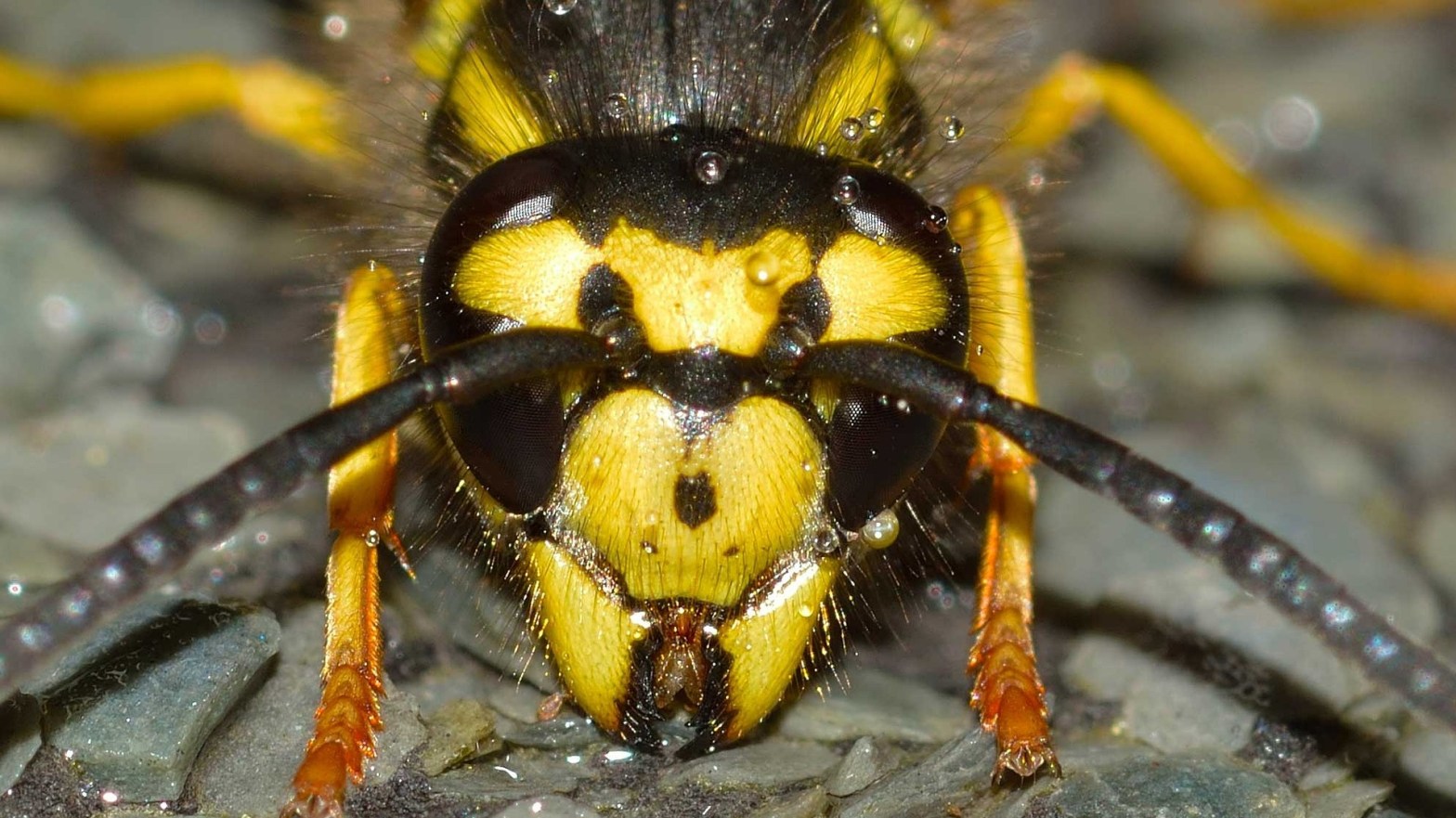
It is often said (well, at least by Joni Mitchell) that ‘you don’t know what you’ve got, ‘til it’s gone.’
It is a sentiment that could be applied to wasps this summer, who, in this neighbourhood, have been noticeable only by their absence. August barbecues and picnics are usually not complete without these busy yellow and black insects buzzing around anything sweet, worrying us with their persistence and constant threat of a nasty sting. But I have kept a lookout for them in Sudbury over the past few months and have seen hardly any.
It would be true to say that most people consider wasps, at best, pests and, at worst, something akin to evil, but attitudes are changing. Headlines like ‘Where have all the wasps gone?’ suggests people are, in a strange kind of way, missing them, or, at least, recognise something is up.
Species
Incredibly, in the UK there are approximately 9,000 species of wasp. This includes larger wasp species that sting and microscopic parasitic wasps. If you are interested, look them up – the glittering ruby-tailed wasp, barely 10mm in length, is widely considered to be among the country’s most beautiful insects.

The wasps we all know – the yellow and black ones – are collectively referred to as social wasps because they congregate together in nests. If you see one, it is likely to be either the common wasp (Vespula vulgaris), or the German wasp (Vespula germanica) that can be told apart by slight differences in their facial markings. The well-known everyday term for wasp, ‘jasper’ may derive from ‘vespa,’ the scientific term and ancient name for wasp.
The paucity of wasps this summer can be explained by the wet weather we had in the spring, according to Seirian Sumner, a Professor of Behavioural Ecology at UCL, who recently wrote about the subject for the excellent Conversation website, which publishes topical articles by researchers and academics.
As Seirian tells it, wasp queens start a new colony by themselves, collecting wood pulp to make a papery nest and hunting bugs to feed the first brood. When the female brood emerge as adults, they take over the duties of feeding the colony. Nest survival rates are low, with less than 10% of colonies surviving into the summer in an average year. If it is a cold, wet spring, foraging conditions become difficult for the queen. If she dies before her first workers emerge, the colony is lost.
According to the Met Office, 2024 was the UK’s sixth wettest spring on record and its wettest since 1986 in a series which goes back to 1836. This severe weather will have also impacted the living things that wasps eat, such as flies, caterpillars, beetles and bees. So, this year’s miserable spring would have spelled double trouble for wasps.
Incidentally, from my own personal experience, the wasp shortage does not apply all around the country. I spent a week camping in Sussex at the end of August and we were beset by wasps, as well as a quite a few hornets, who seemed to like to take refuge in the gaps between the tent covers.

Predators
It is not uncommon to hear people question whether wasps contribute anything worthwhile to the ecosystem.
I have a book on my shelf entitled: “Does Anything Eat Wasps?’ – a compendium of letters sent in by readers of New Scientist magazine. And the answer to both questions is ‘yes’ – wasp predators include frogs, thrushes and badgers.
Wasps are also highly effective pest controllers, hunting an array of invertebrates from spiders to flies, which might otherwise destroy crops if not kept in check.
Interestingly, adult wasps are vegetarians, like bees. They hunt other creatures to feed their growing larvae. Adult hunters survive on sugars, drawn from their larvae, as well as the nectar from flowers. In this way, they are important pollinators.
While there has been a lot of study dedicated to bees, not so much research has focussed on wasps – perhaps because they are regarded as less friendly. However, in Brazil scientists have found that the venom of a native wasp could be used to fight cancer. A toxin in the sting destroys cancer cells without harming normal cells, leading researchers to suggest wasps may have the potential to save human lives.
Now that is what you call a sting in the tail!
 Suffolkwilds