Fresh from a holiday in South-east Asia, a work colleague recently described how it felt returning to a dreary England after several weeks in tropical Malaysia. “It was like the colour dial had been turned down from 10 to 2,” he told me.
As the last of the autumn leaves fall away and the days become more overcast and mizzley, we’re certainly sliding towards the subdued end of the colour spectrum. But even in this dank corner of the world, nature offers up some vivid hues. One such visual delight is the plumage of the jay.
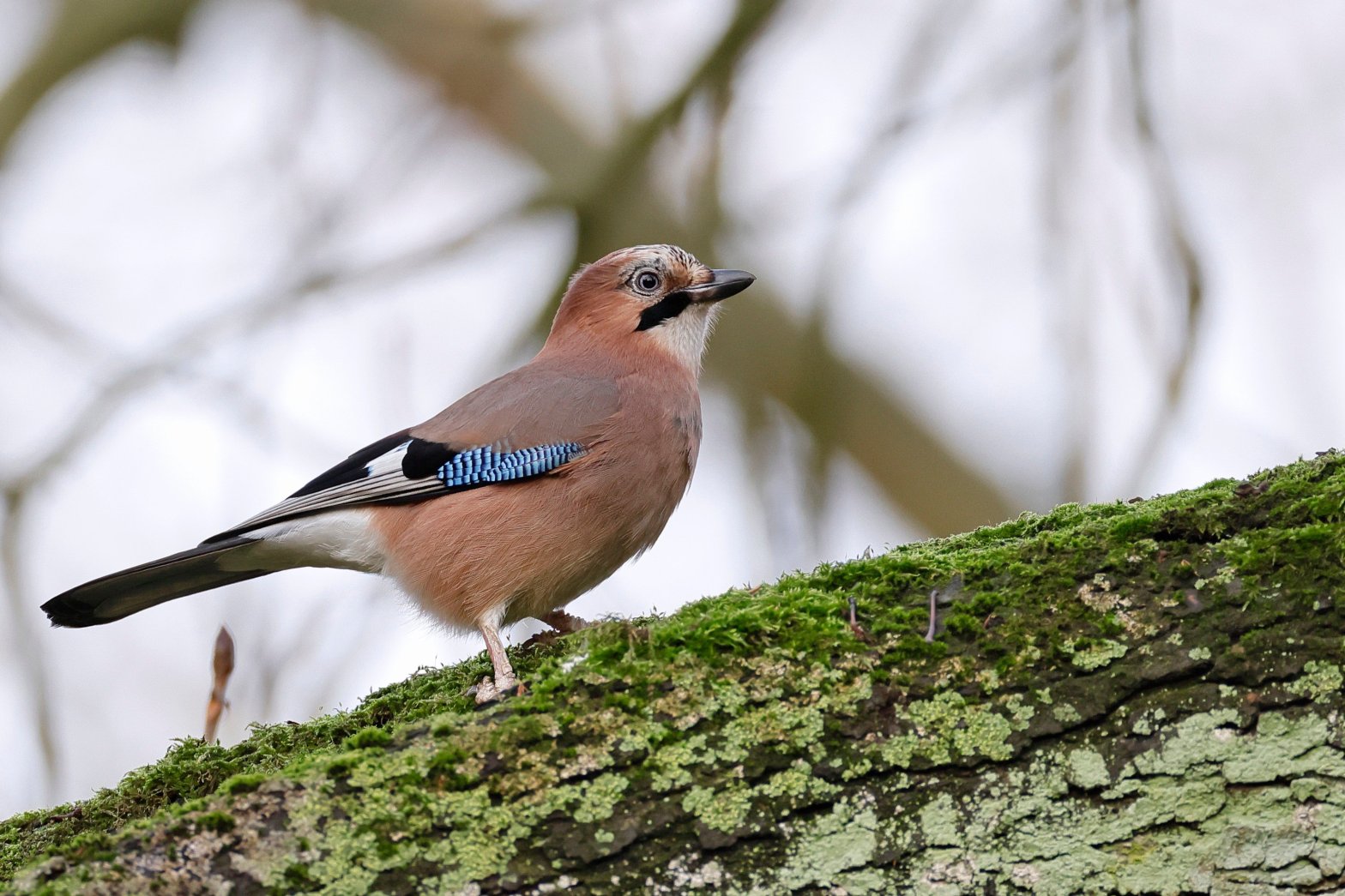
The Eurasian Jay, to give it its full name, is a large-ish bird, the size of a crow, with a body of pale pink feathers, a white rump and electric blue and black barbed feathers on its wings. It’s a beautiful, striking creature, one that led nineteenth-century naturalist WH Hudson to call the jay “Britain’s bird of paradise”.
But unlike birds of paradise, the jay is not a showy creature, choosing to keep itself hidden in wooded areas. Because people don’t see them much, they assume they are a rare species but that is not the case, – the jay is simply shy and wary of humans.
Screech
I remember spotting a jay on the Common Lands once and cautiously following it along the brook on Great Fullingpit Meadow. Each time I encroached, it hopped behind the next tree along the way, trying to stay out of sight. I see them quite regularly, flashes and glimpses as they move to better cover, the white rump and flash of blue always making the pulse race.
My most recent sighting was last week along the old railway line into Lavenham. I say sighting, as I did eventually see it flying off away from me but I had heard it squawking on for a good few minutes before I could make it out.
The jay is a member of the crow family and it is Corvidae who provide much of our natural soundtrack during the winter months. Think of a lone crow cawing over the misty meadows; the silence broken as a flock of yapping jackdaws disperse; recall, if you will, the machine-gun natter of a magpie sat high in a tree, using its long tail to balance.
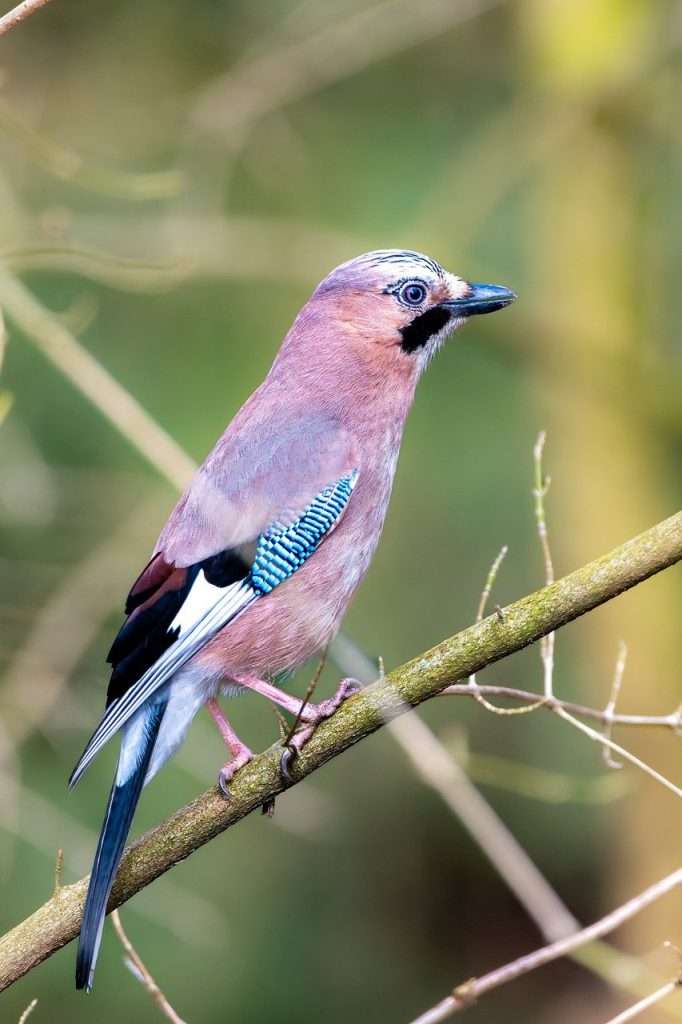
Add to this list the unnerving screech of the jay, to my ear an exotic sound but one as dark as its feathers are bright. This habit is enough to earn the jay the Latin name – Garrulus glandarius – where garrulus means to ‘chatter’. When I first heard the jay en route to Lavenham, I was sure I was listening to two birds communicating, but slowly realised that there was just one bird talking loudly to itself. I’ve read that jays are also excellent mimics of other birds, and that impersonating tawny owls is a particular speciality.
From little acorns
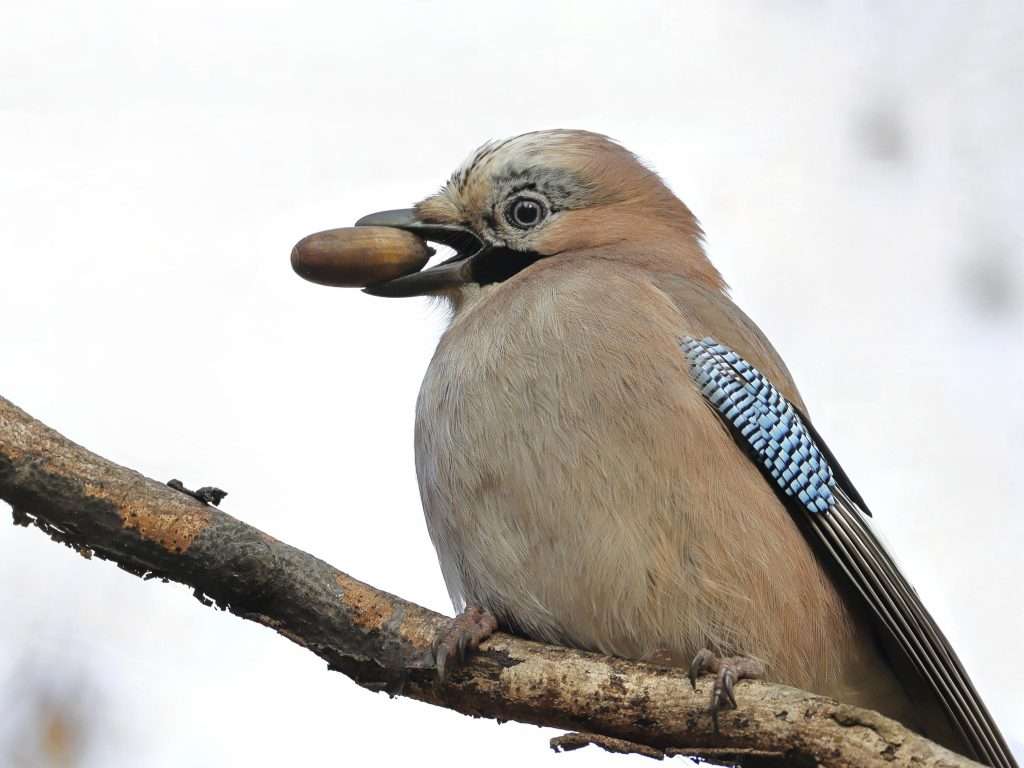
The second half of the jay’s scientific name, glandarius, refers to the Latin term for acorn, glandis, because the jay is renowned for collecting and hoarding acorns ahead of the winter.
Researchers have tracked individual jays who can collect several thousand acorns each year, hiding them under leaves and in nooks that it will return to during the winter months. The jay’s ability to remember the multiple locations of its many food stores is a sign of its intelligence – an aptitude linked to all crow species.
However, not even the brightest jay can remember where it has left all its acorns and thus the bird plays an important role in distributing new oaks across our countryside. Scientists studying the fossil record have long been fascinated by the speed that oaks spread northward at the end of the last Ice Age around 11,700 years ago – and believe that this rapid dispersal was down to the acorn-caching behaviour of ancient jays.
Feathers
It’s little wonder the jay is known to shun people as they were once hunted for their wing feathers, which were prized by hat makers. In less enlightened Victorian times, hats adorned with beautiful plumes were the height of fashion. One record from 1880 describes the Duchess of Edinburgh touring Cannes wearing a muff made entirely of the jay’s blue and black wing feathers. It was this craze for feathered hats – this ‘murderous millinery’ – that led to the formation of the Royal Society for the Protection of Birds (RSPB) of which WH Hudson was an early champion.
Today, these stunning azure feathers are still used to make flies for fishing and a quick search of the internet throws up multiple suppliers of these feathers claiming they are ‘ethically sourced’ – a suitably vague term.
I prefer to ‘ethically source’ my jay feathers while walking in the woods, from a distance and allowing them to stay attached to this stunning bird.
 Suffolkwilds

