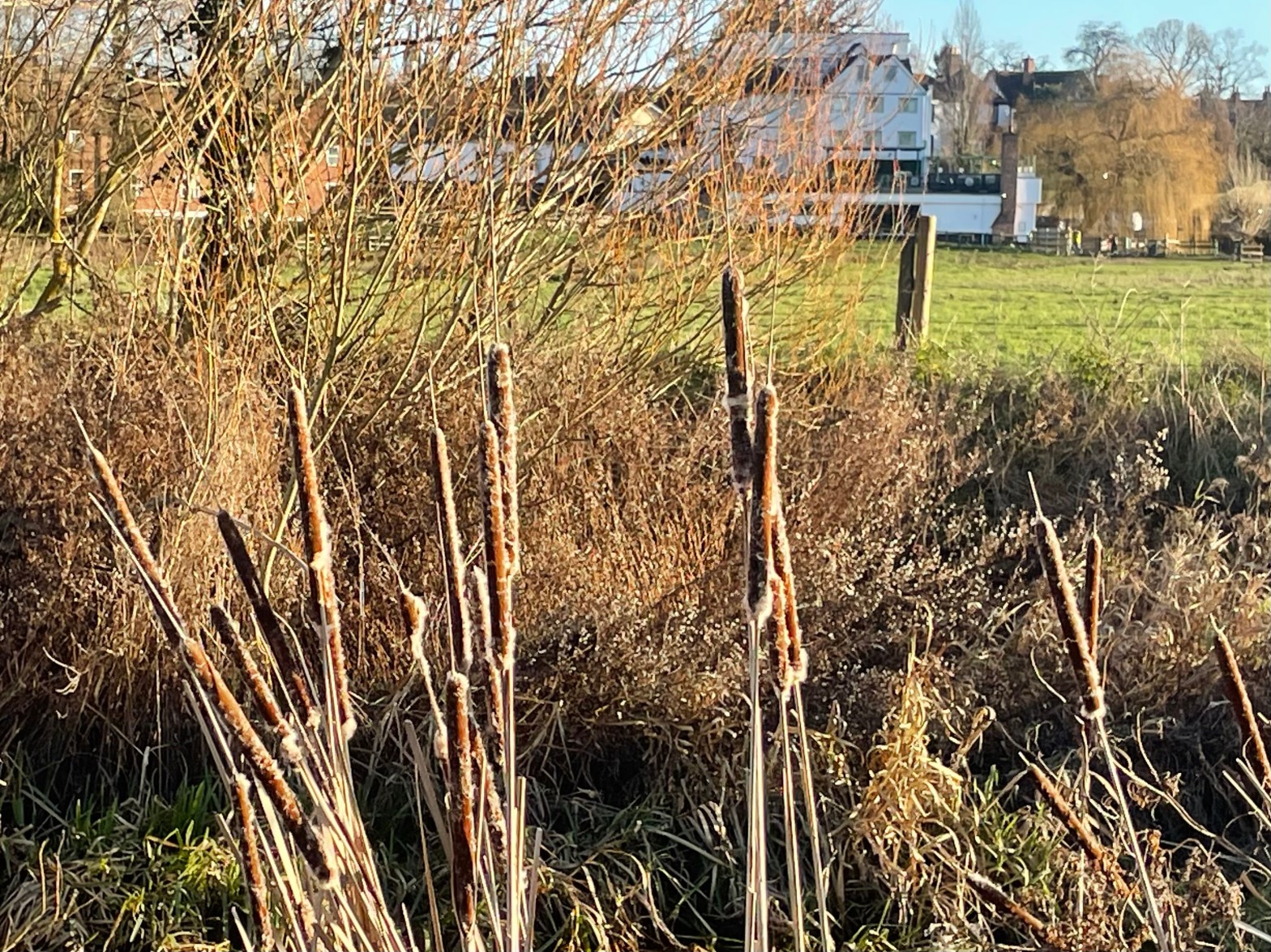
What’s in a name? Well, quite a lot if we are talking bulrushes.
Clusters of these distinctive, tall-stemmed waterside plants (Typha latifolia) remain visible during the winter months on the meadows. Their brown, sausage-like flower spikes are unmistakeable; these appear from June to August, but the plant persists during the cold period, with the plants’ stems and leaves often dying back to a brownish colour from their usual green.
Moses
But what we call a bulrush isn’t really a bulrush. It’s actual name is great reedmace – and a true bulrush is a different plant entirely; a much less showy sedge with a brush-like flower.
This misunderstanding harks back to the nineteenth century when Victorian artists depicting the scene of ‘Moses in the bulrushes’ would often include the great reedmace and its brown flower heads in their works. While botanically inaccurate, the name stuck, reinforced by the learning of generations of Sunday school pupils. Today, even the most ardent botanists have given up trying to impose the name great reedmace and, it seems, everyone has accepted that bulrush is the name we can all use.
While on the subject of names, Australian relatives who have been staying with us for Christmas tell me that Down Under they call a bulrush a cumbungi. I’ve also found out that in the US, they are known as cattails, so it seems there are many names we can use!
Fluff
I recently broke off the brown spike of a bulrush growing in one the common land ditches to see what it was made of and though it felt velvety and dense, it immediately started to break up into hundreds of individual seeds, each encased in fine, fluffy hairs, allowing them to be carried by the wind like dandelion seeds. Days later I was still finding fluff on my jumper. I’ve read these spongy heads were once used by resourceful country folk to stuff pillows and insulate shoes – hopefully, when they were younger and less likely to break up.
A quick search of the internet, will also throw up plenty of advice for foragers on how to harvest and eat bulrush roots, known as rhizomes, that grow like thick, bearded ropes down in the mud of waterways. Apparently, the roots can be eaten raw, roasted like yams, or made into a flour, a long-winded process undertaken in the days when food scarcity during winter was a widespread issue.
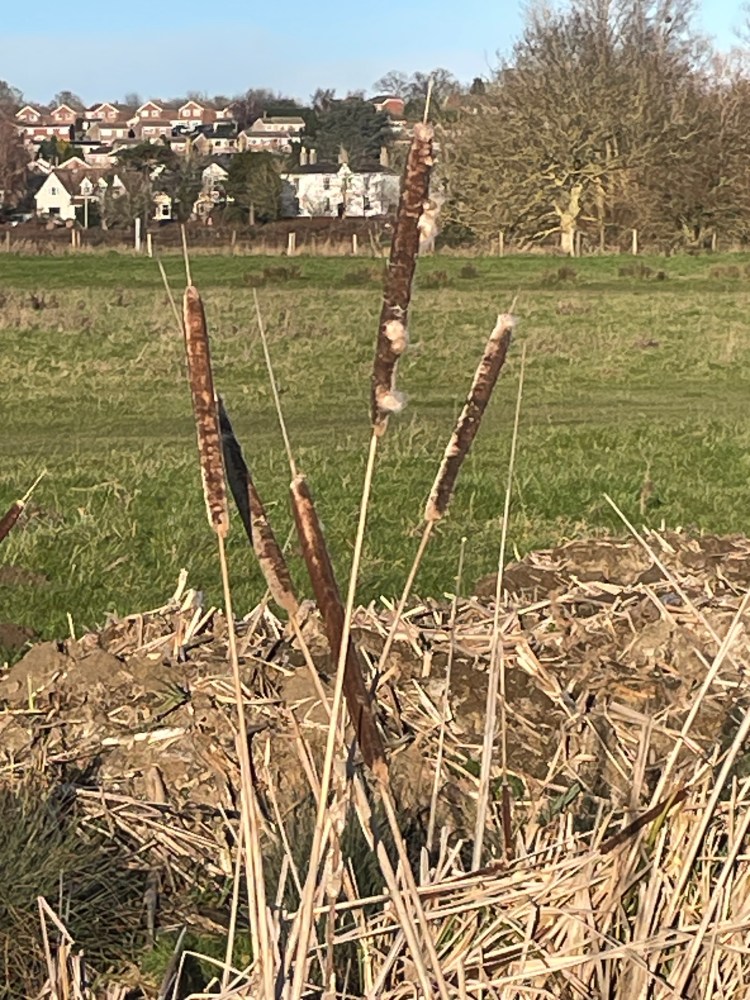
Natural filter
But anyone looking to try eating off the land in this way should beware because the bulrush is also an ace absorber of contaminants, and should not be consumed if harvested from potentially polluted water sources.
The bulrush acts as a natural nutrient sink, absorbing excess nitrates and phosphates from the water through its tissues to support its own growth. These nutrients, often from agricultural runoff or sewage, can otherwise lead to harmful algal blooms. Bulrushes are also known for their ability to accumulate heavy metals, effectively preventing them from entering the wider environment.
What’s more, bulrushes transport oxygen from their leaves down to their roots, creating an oxygen-rich environment that supports a thriving community of beneficial aerobic bacteria.
Due to its natural ability as a filter, bulrushes are intentionally planted in constructed wetlands and reed-beds to treat wastewater, manage agricultural runoff, and restore polluted aquatic ecosystems. Studies have shown that these systems can remove up to 90% of nitrogen and 60% of metals from water.

