Call me a simple man, but one of my favourite possessions is my pair of muck boots.
This time of year, if you want to venture out into the countryside and certainly if you fancy a stroll on my local common lands, you’d better take your wellies. For me, galoshes represent the freedom to roam.
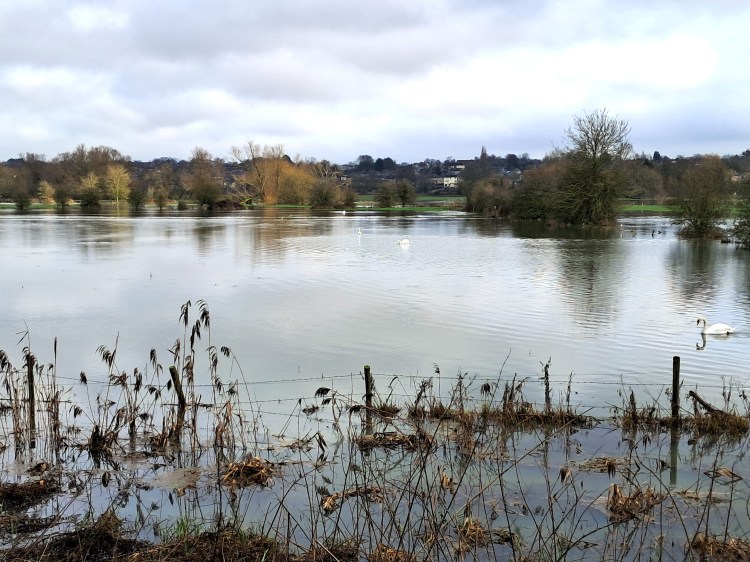
At the time of writing, the UK has experienced 37 successive days of rain. According to the Met Office, January saw 150% of the rainfall we typically get for the first month of the year – and, if anything, February seems wetter. This is, we are told, the new normal as climate change drives a general trend towards warmer, wetter winters where the atmosphere holds more moisture, resulting in heavier rainfall and more intense storms.
I was contemplating this state of affairs while walking on Kings Marsh and wondering how wildlife copes with more frequent inundations. I had recently read an article about how, according to the Devon Wildlife Trust, floods in the West Country were taking its toll on wildlife such as hedgehogs and dormice, who were unable to escape the rising waters.
Fortress
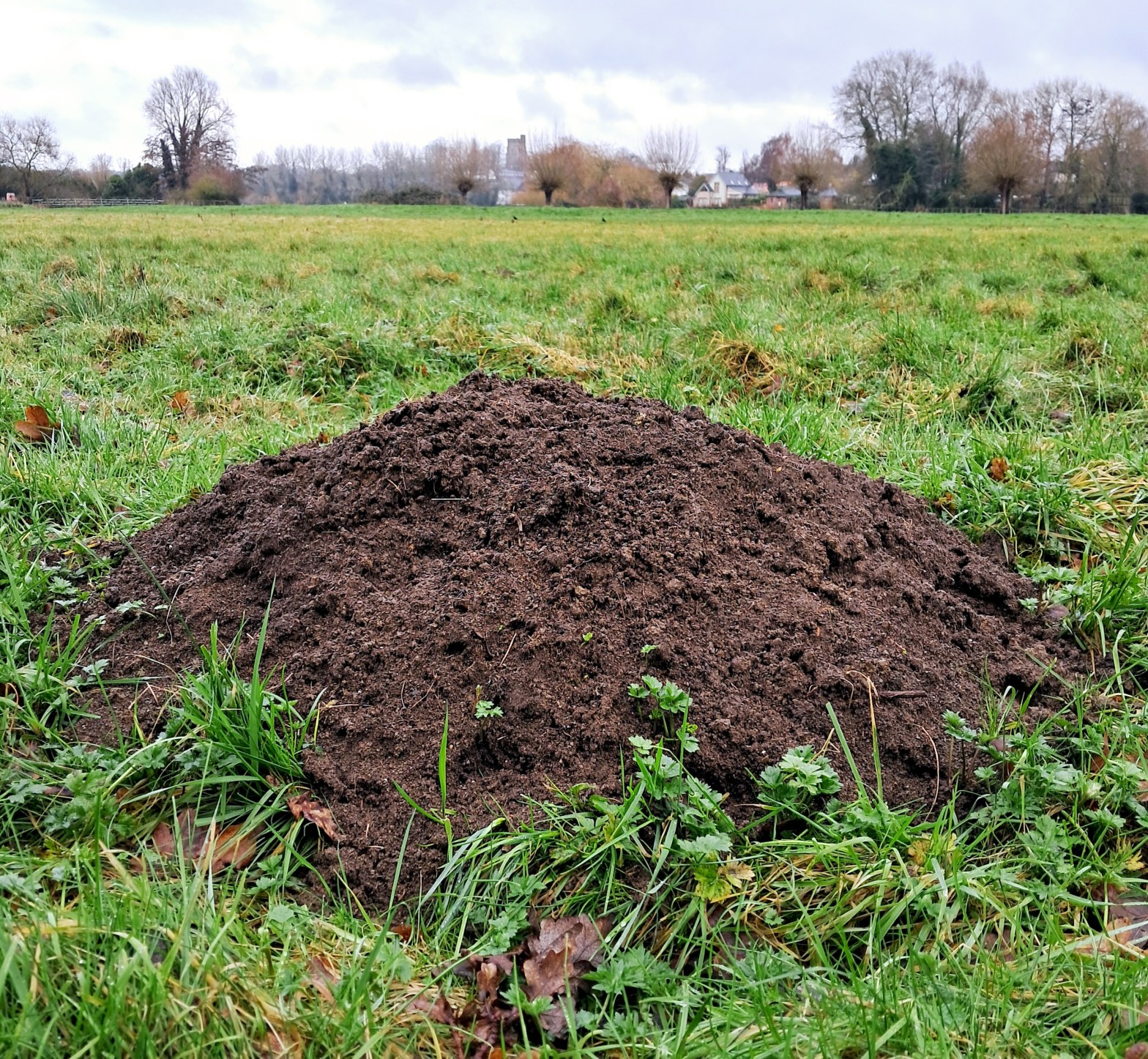
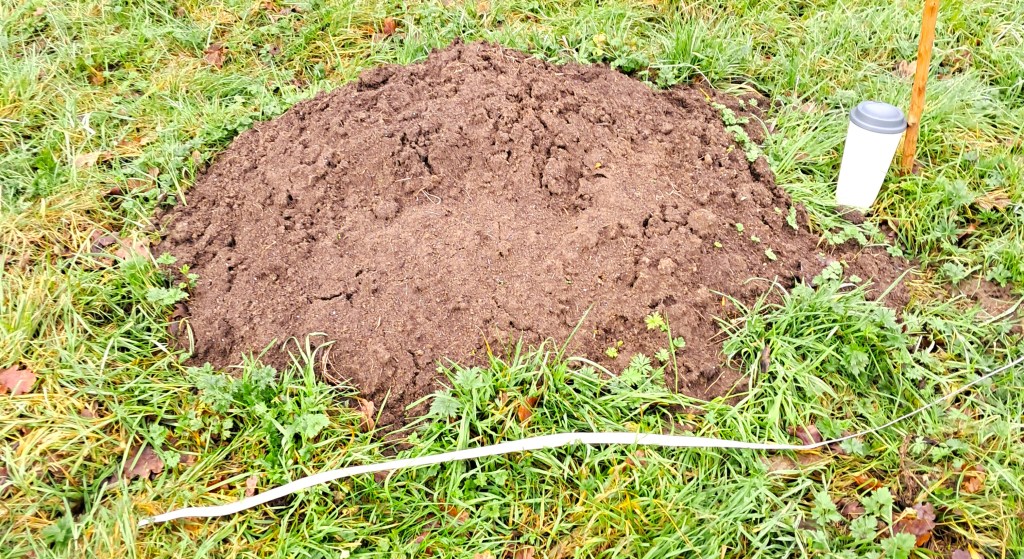
Looking up, in front of me was the biggest molehill I have ever seen – a giant, well over one metre in diameter and about 40cm tall (I even returned with a tape measure to make an official recording, I was so blown away). Comparing this colossus with the standard molehills nearby, was like observing a dinner plate among saucers. It was enough to make any proud lawn owner break into a cold sweat.
This, I am fairly sure, was a so-called mole fortress – an almost mystical structure I have read about but never seen. There is still a great deal that is unknown about these uber-molehills but they are commonly found in areas where there is a high water tables or that are prone to flooding. The presumption is that moles build these as safe retreats to higher ground in preparation for when their tunnels get water-logged.
Whereas normal molehills are simply piles of soil thrown up, as the subterranean creature excavates below the surface, mole fortresses contain a network of tunnels including nests and food store areas. Apparently, mole fortresses are the work of a solitary mole, often a female – a huge amount of work for a blind animal smaller than your average burrito.
Adaptions
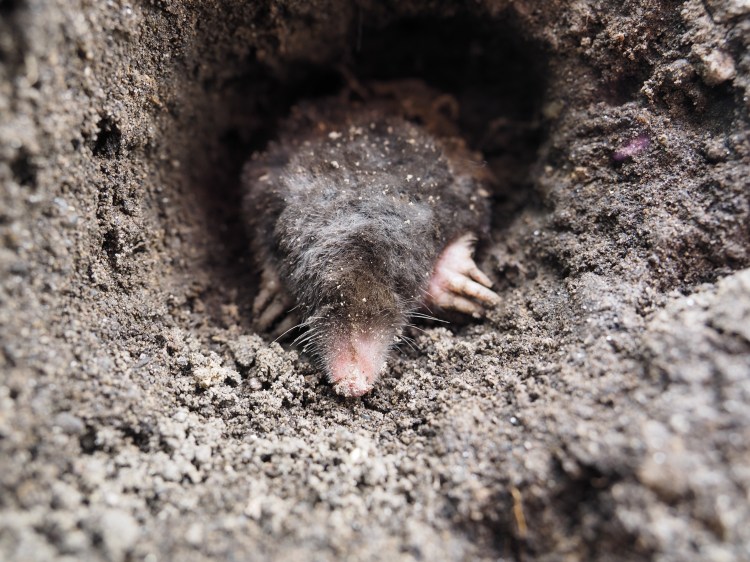
But, as you might imagine, for a mammal that has evolved to survive underground, the mole is a remarkable creature that boasts many wonderful and unusual abilities.
For one, scientists have discovered that Talpa europaea (the scientific name for a mole)is tolerant to high levels of carbon dioxide, so is able to re-breathe its own expired air – an immensely helpful adaption if you are spending a lot of time in tight spaces. This capability is down to a specialised haemoglobin protein found in the mole’s red blood cells.
What is more, moles have evolved to grow an extra thumb – what is known as a prepollex that sits next to its regular thumb. This helps with the constant digging and must be incredibly beneficial if one has a mole fortress to construct. While the mole’s other digits have multiple joints, the prepollex is made up of a single, sickle-shaped bone that develops later and grows from its wrist.
Venomous
It may also surprise you to find out that the European mole is one of only a handful of mammals worldwide that are venomous. They are not deadly to humans but they do produce toxic saliva that they use to paralyse earthworms, their main food source. Through this method they can store worms without killing them and return to feed on these tasty morsels when required.
Maybe it is the combination of the mole’s toxic saliva and diet of worms that has something to do with its notoriously bad flavour to human tastebuds?
That is according to eccentric nineteenth century palaeontologist and Oxford University lecturer William Buckland who famously set himself the ambitious target of eating every animal species on Earth. He claimed to have tried unusual animals such as alligator and kangaroo but told an acquaintance the most unpleasant creatures he had digested were mole and bluebottle fly.
Certainly food for thought if not for nourishment!
 Suffolkwilds