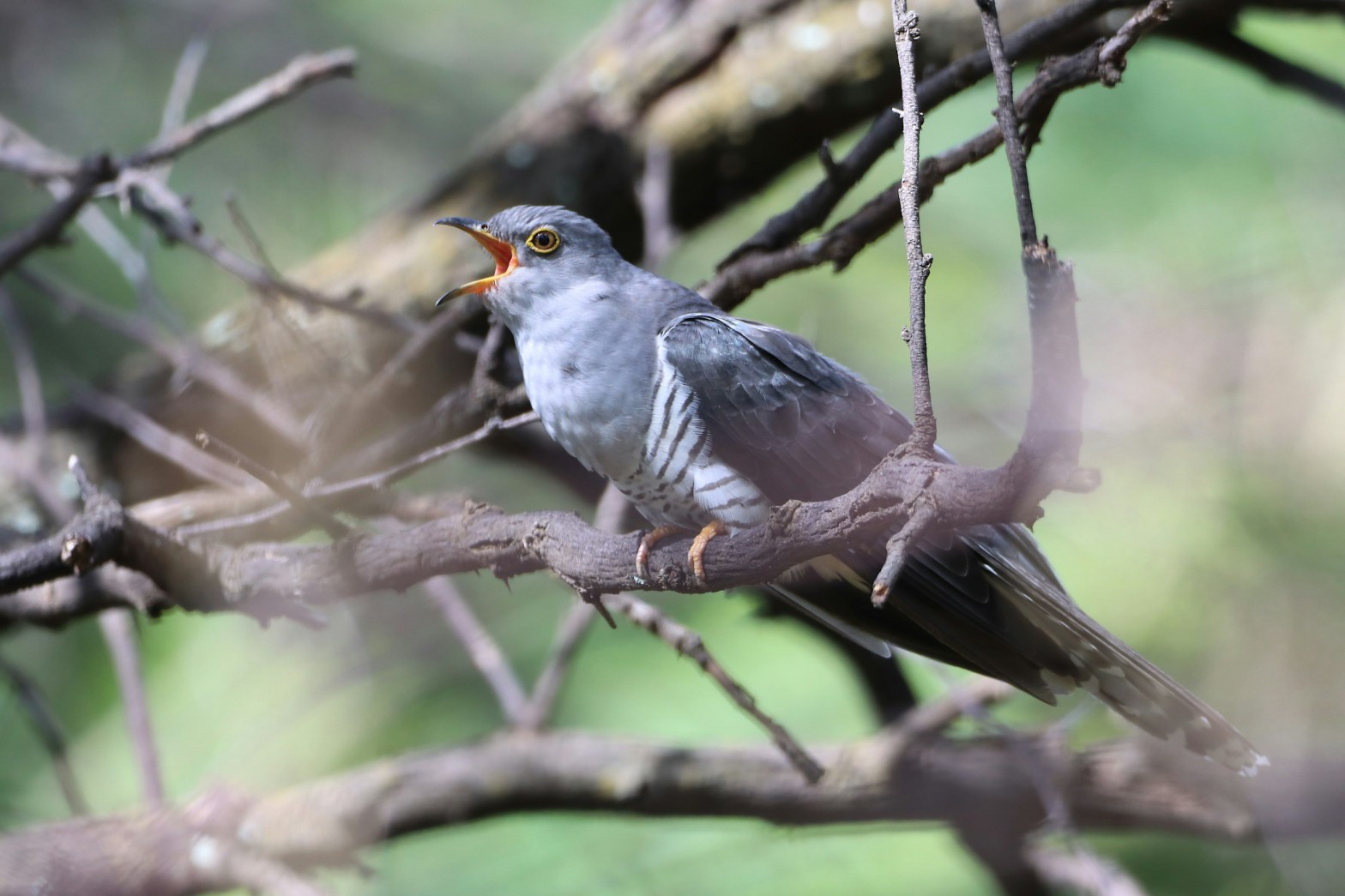
The first Sunday in May, last weekend, was apparently designated International Dawn Chorus Day.
Birds may have been singing at daybreak for millions of years, but it seems the trend these days is to give many of nature’s standout wonders a day or an event, which makes it more accessible to people.
It certainly worked for me and, remarkably, (for someone who enjoys a lie-in) I was out of the door and heading for the Common Lands by 4.40am. It was still dark as I reached The Croft and the first sound that hit me was the unmistakeable song of a blackbird, filling the green space with its melancholic and flutey refrain. I could also hear hints of a robin’s song, although this was drowned out by the cacophony of the rooks who nest in the oaks here.
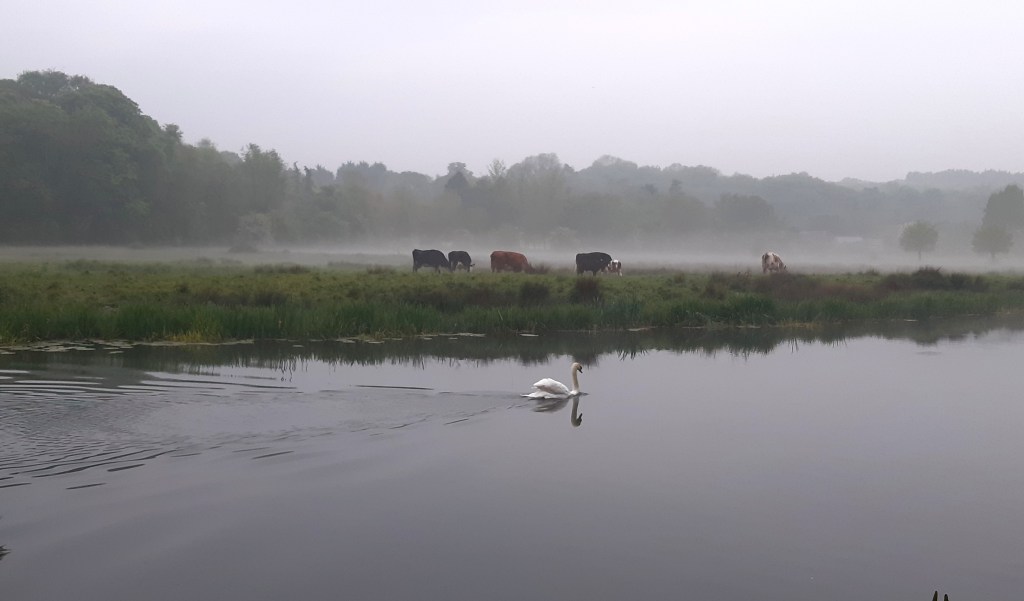
Magical
There are different theories as to why the dawn chorus occurs and why birds put an extra effort into their singing as night turns to day. Research has shown that birdsong travels significantly further in the early morning, often reported to carry up to 20 times further than later in the day. The air is cooler and often more humid than after sunrise, which helps sound resonate and travel longer distances. There is also less human activity, such as traffic, which means that the birdsong is not drowned out.
Another theory I’ve read is that many birds don’t like to sing at night – they need their rest and don’t want to alert nocturnal predators to their whereabouts – so as day breaks, they take the opportunity to hold forth and release their pent-up melodies.
Whatever the reason, it’s a magical time to be out on the meadows. The early bird may get the worm but also at this time of year, those out and about as the skies lighten are treated to our native birdlife in all their symphonic splendour. There are also other wildlife treats if you walk Sudbury’s green space at this hour – I saw a Daubenton’s bat foraging centimetres above the water’s surface at the Croft bridge, and a muntjac deer preening its young fawn in the midst of a woodland ride in Kone Vale.
Cuckoo
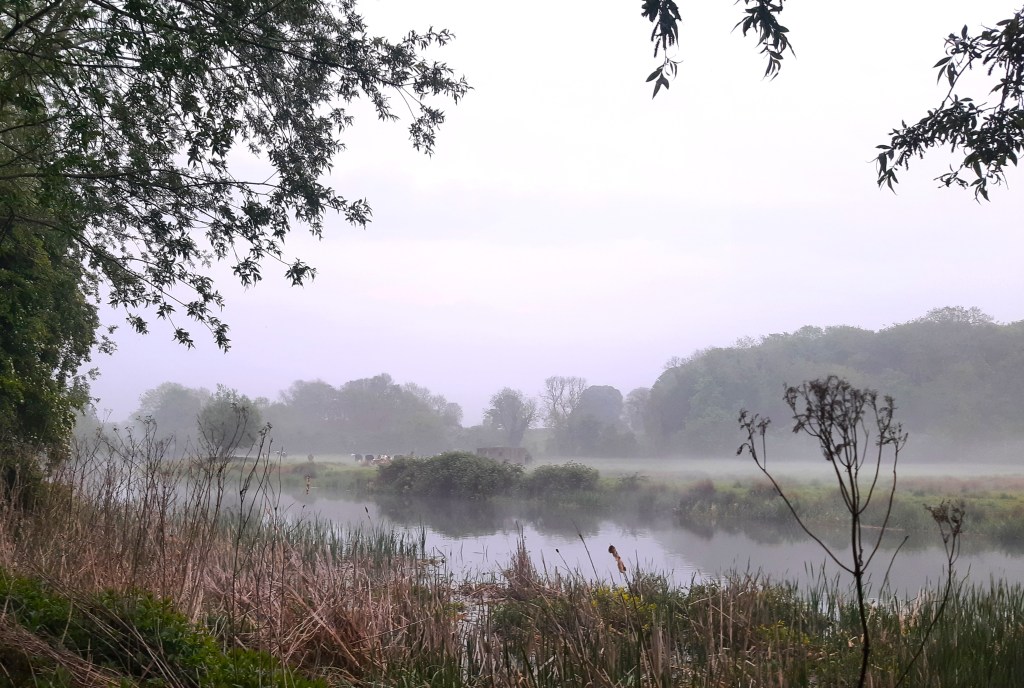
Fifteen minutes later I was standing in the middle of a misty Great Freemen’s Common surrounded by the distant resonance of wood pigeons cooing, covering the meadows like a sonic blanket. This backdrop was pierced by two distinct sounds – the feisty chirrup of a wren – one of our smallest birds but one of our loudest – and the metronomic two-tone call of a cuckoo. Landscape became soundscape.
I walked towards the sound of the cuckoo, pinpointing its location in a large riverside willow tree. I marvelled at the thought that this bird had flown all the way from the Equatorial Africa, probably across the Sahara Desert, to be in this corner of Suffolk.
Later, I heard a second cuckoo beyond Lady’s Island on Cornard Riverside and realised that the two birds were competing with each other. One would let forth with its unmistakable song for a few minutes, before stopping exhausted, whereupon the other would start up with vigour. Competition is at the heart of the dawn chorus; the sounds you hear come from male birds broadcasting their availability and vitality to potential female mates whilst creating an auditory boundary of their territory to ward off challenging males.
Warblers
Near the Centenary pollards, the scratchy call of a reed warbler emanated from a stand of bull rushes. These are one of the bird species targeted by the parasitic cuckoo, some of which have evolved to produce a mottled grey-brown egg the same as the reed warbler. The female cuckoo will sit for days studying the whereabouts of reed warbler nests, and can hold her eggs in her oviduct, waiting for the perfect moment to strike. Finally, when the host bird is away from her nest, the cuckoo swoops in, lays one of her eggs and removes one of the host bird’s, taking it away in her beak.
Other warbler species could be heard as I made my way into more wooded areas, such as the Valley Trail and Kone Vale: the piercing chirp of the chiffchaff, the chatter of a whitethroat and the floating melody of the blackcap. Song thrush and great tit were also in abundance. I must have heard at least 20 birds in total, including buzzard, collared dove, jackdaw and pheasant.
And, as we know, no musical arrangement is complete without the accompaniment of drummer. Just as I was leaving the riverside to head home, the unmistakeable sound of a greater spotted woodpecker hammering against a tree started up…

